
Four things
actually matter.

Train, eat, test, recover. Four things, run together, and boring on purpose. The reason it works is that all four run at the same time, checked against real numbers instead of how you felt that week.

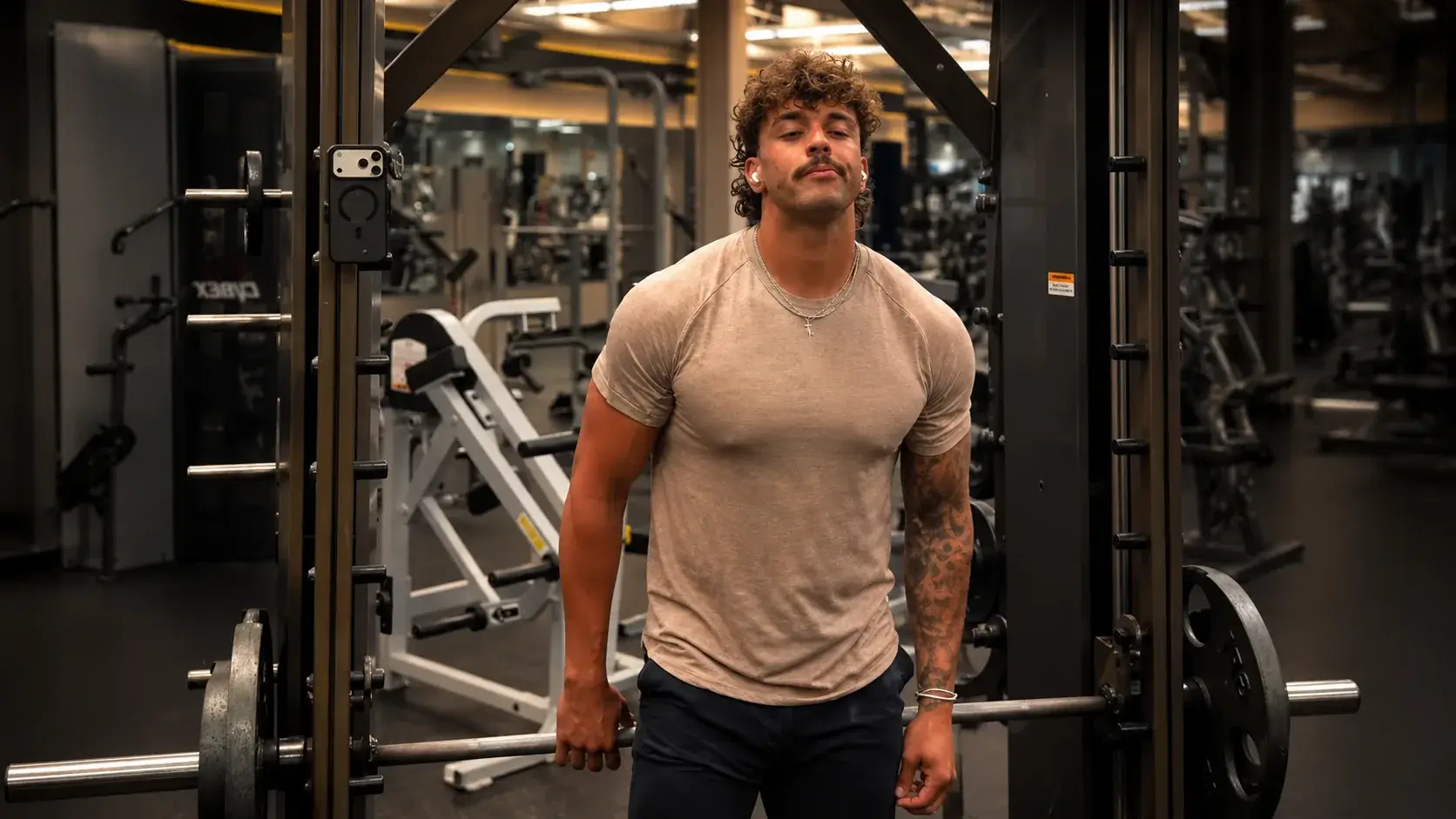
Sam Hanson in the gym

Most people are guessing

They copy a program from someone with different genetics, eat whatever a podcast recommended that month, sleep six hours, and then blame their metabolism. I did a version of that for four years of college baseball and it cost me real time.

The fix was not exotic. It was writing down what I was doing, getting my blood drawn so I could see the parts I could not feel, and being honest about sleep. Everything on this page came out of that.

The system

Four parts. None of them work on their own, which is why nobody sells them this way.

Train

Lift with a reason

Most people either train hard with no plan or follow a plan built for somebody else's body. Both waste years. Your program should be written around your frame, your schedule, your history of injuries, and what you actually want to look and feel like — then adjusted as you change.

  • Three to five sessions a week, built around your real calendar
  • Progression you can see on paper, not vibes
  • Movement screening first, so old injuries stop dictating your training
  • Conditioning that supports the lifting instead of fighting it
Fuel

Eat like an adult

I have watched people white-knuckle 1,200 calories for six weeks, quit, and gain it all back. Food is the part you have to live with every single day, so it has to be built to survive real life: work travel, weddings, the fridge you actually own. Enough protein, enough total food, and a plan that bends without breaking.

  • Protein and calorie targets set to your body and goal
  • A short list of meals you like, on repeat
  • Rules for restaurants, travel, and the weekend
  • Adjustments every couple of weeks based on what the scale and mirror say

Test

Get the data

This is the step people skip. You can be lean, strong and still be running low on vitamin D, iron or magnesium, with thyroid and hormone numbers quietly drifting. A mirror will never tell you that. A blood draw will, and it takes fifteen minutes. I test twice a year and I ask every client to do the same.

  • 80+ markers in one draw: hormones, thyroid, inflammation, nutrients, metabolic
  • Read against optimal ranges, not just the range that flags disease
  • Retest to prove the plan is working instead of assuming it is
  • Numbers first, then supplements — never the other way around
How bloodwork works

Recover

Sleep is the program

Training is the stress. Recovery is where the result actually gets built. Sleep, stress management and how you handle a bad week decide whether any of the work sticks, and it is the first thing to go when life gets busy. If you sleep five hours a night, nothing else on this page matters much.

  • A sleep routine that survives a real schedule
  • Deload weeks planned in advance, not taken in a panic
  • Stress and mental load treated as training variables
  • Soft-tissue and mobility work that takes ten minutes, not ninety

What working together looks like

1

A conversation

Twenty minutes on a call. Where you are, what you have tried, what you want, and whether I am the right person for it. No pitch deck.

2

Baseline

Movement screen, current numbers, photos, and ideally bloodwork. We find out what is actually true before anyone writes a program.

3

The build

Your training block and your nutrition plan, written from the baseline. Delivered in a format you can open at the gym without squinting.

4

Every week after

Check-ins, adjustments, and a direct line to me when something comes up. This is the part that separates a coach from a PDF.

Where to start

Three doors, depending on how much you want to take on right now.

1:1 Coaching

The whole system, built around you, with me in your corner every week. Small roster, consult required.

Schedule a Consult

Start With Bloodwork

Not ready to hire a coach? Get the data first. One draw, 80+ markers, a practitioner who reads all of them.

See the Panels

Fix the Obvious Gaps

The three or four things nearly everyone tests low on, and what I actually take myself.

What I Take

Questions I get

Do I need to be an athlete for this to work?

No. Most of the people I coach have desk jobs and want to be leaner, stronger and less tired at 5pm. The principles are the same whether you are chasing a physique goal or a professional season. What changes is the volume and how aggressive we get.

What if I have never lifted seriously before?

Beginners get the fastest results of anyone, because everything works when nothing has been tried. We start simple, build technique before load, and add complexity only when it is earned. You do not need to arrive in shape to start.

Do I have to get bloodwork to work with you?

It is not a hard requirement, but I push for it. Working without labs means guessing about the internal half of the picture, and I would rather not guess. If cost is the issue, we start with training and food and add testing when you are ready.

Is this a supplement pitch?

No. Supplements are the last ten percent, and I only recommend things that fill a gap your bloodwork actually found. I do have an ambassador relationship with Paath and I earn a commission if you buy through my links, which is why I keep the list short and boring.

How long before I see something change?

Strength moves in two to three weeks. Body composition shows up around six to eight. Blood markers usually need a full three to six months to move meaningfully. Test at the start, not at the end.

I am a coach, not a doctor. Nothing here diagnoses or treats anything, and it does not replace your physician. Talk to a licensed practitioner before changing anything medical.

Ready when you are

I keep the roster small so the coaching stays personal. If that sounds like what you have been missing, book the call.

Schedule a Consult

Or email me directly: team@thesamhanson.com